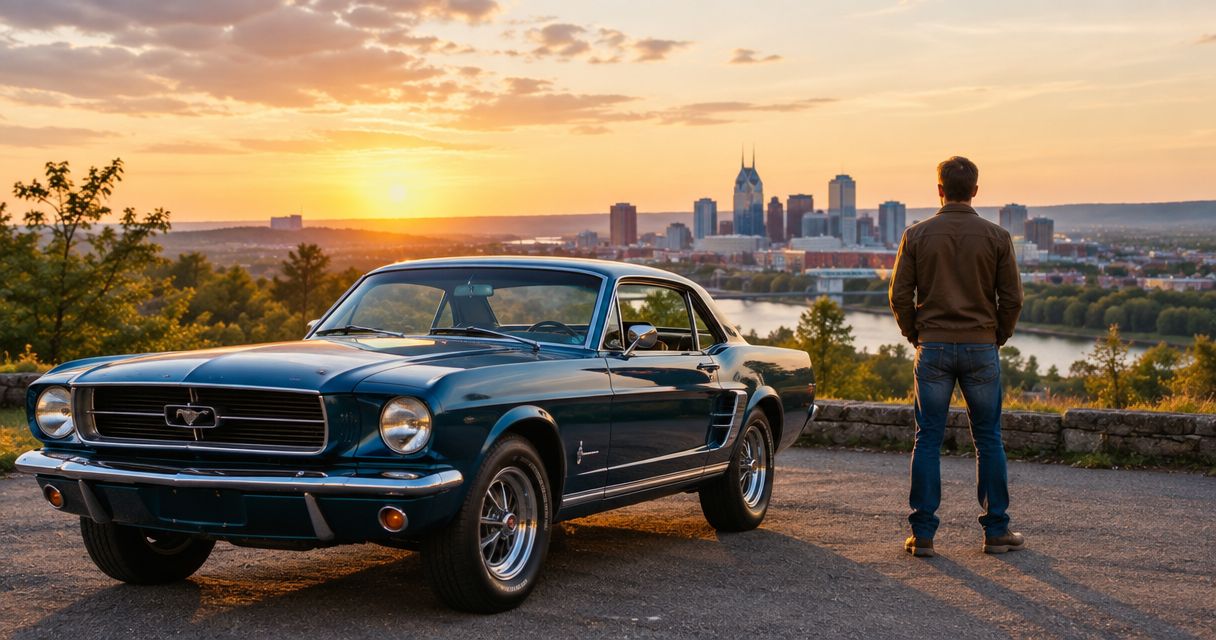
Financing an exotic or collector car in Nashville in 2026 comes down to a handful of real paths — conventional bank loans, specialty collector-car lenders, dealer-facilitated financing, or cash — and the right one depends on how rare the car is, how fast you need to close, and how the lender treats loan-to-value on a vehicle that doesn't depreciate like a typical used car.
- Specialty collector-car lenders fit rare exotics better than conventional bank loans because they underwrite agreed value, not blue-book value.
- Nashville and Franklin banks work well for common, higher-volume models but struggle with low-production or appreciating exotics.
- Exotic car financing nashville buyers arrange varies most on loan-to-value fit, not headline interest rate.
- Cash purchase remains the strongest negotiating position and removes lender appraisal contingencies entirely.
- Confirm current APR, loan-to-value caps, and mileage terms directly with each lender before committing in 2026.
Why this matters
A conventional auto loan officer prices risk off a depreciation curve. That model breaks down fast on a low-production Porsche, a well-documented Ferrari, or a Lamborghini with a clean service history, because those cars can hold value or appreciate rather than lose it. Underwrite one like a Honda Accord and you'll get a low loan-to-value offer, a short term, or an outright decline.
That gap is exactly why specialty lenders exist in the collector car space, and why a typical bank auto loan runs 5 to 7 years while a specialty collector-car loan can stretch to 10 to 15 years. The term length reflects how the lender views the asset, not just your credit file. Buyers working with Mission Motorsports on a Porsche, Ferrari, or Lamborghini purchase in Nashville should know which lane their vehicle falls into before they start shopping rates.
Best overall for rare or appreciating exotics: specialty collector-car lenders, because they underwrite agreed value instead of standard book value. Best for buyers with existing banking relationships: local Nashville and Franklin banks or credit unions, which work fine on higher-volume, common models. Best budget option: cash purchase, which eliminates interest cost and lender appraisal contingencies entirely.
What makes the best exotic car financing option
- Loan-to-value fit for low-production or appreciating vehicles, not just current-generation models
- Speed to close, since a slow lender can cost you a time-sensitive purchase on a rare car
- Specialization in exotic and collector underwriting, versus a generic used-car loan desk
- Mileage and usage flexibility — agreed-value coverage versus strict actual-cash-value terms
- Documentation and title handling for out-of-state purchases and enclosed transport
- Insurance requirements at closing, since most lenders require agreed-value coverage before funding
Exotic car financing in Nashville — at a glance
| Option | Best for | Standout feature | Key limitation |
|---|---|---|---|
| Specialty collector-car lenders | Rare, low-production, or appreciating exotics | Underwrite agreed value, not book value | Fewer branches, mostly phone/online origination |
| Local Nashville & Franklin banks/credit unions | Buyers with existing banking relationships | Familiar process, in-person service | Weak loan-to-value fit on rare or unusual models |
| Dealer-facilitated financing | Buyers who want one point of contact | Financing arranged alongside the purchase paperwork | Lender options limited to what the dealer offers |
| Cash purchase | Buyers with liquidity who want leverage | No interest, no appraisal contingency | Ties up capital that could sit elsewhere |
| Securities-backed or home equity lines | High-net-worth buyers preserving portfolio positions | Keeps other investments untouched | Rate tied to a floating index, not a fixed auto term |
1. Specialty collector-car lenders: best for rare or appreciating exotics
Lenders that specialize in collector and exotic vehicles build their underwriting around agreed value and production numbers, not a generic depreciation table. That matters most on a limited-production Ferrari, a manual-transmission Porsche, or a Lamborghini with documented low mileage, where a standard bank loan officer has no comparable data point.
Specialty lender pros:
- Loan-to-value offers that reflect the car's actual market position, not a blue-book guess
- Terms that can run 10 to 15 years, lowering the monthly payment on a high-value purchase
- Underwriters who understand mileage, originality, and documentation as value drivers
Specialty lender cons:
- Origination is mostly phone and online, with no local branch to walk into
- Rates and terms vary by lender and by vehicle — confirm current numbers directly before signing
- Some programs require agreed-value insurance in place before funding closes
Best for: buyers financing a vehicle a conventional bank won't fully value. Verdict: Buy — the closest fit for exotic car financing Nashville buyers on a genuinely rare car.
2. Local Nashville and Franklin banks or credit unions: best for buyers with existing relationships
If you already bank locally in Middle Tennessee and the vehicle is a higher-volume, current-generation model — a recent 911, a late-model Cayman, or a common trim — a standard auto loan through your existing bank or credit union can be the simplest path.
Local bank/credit union pros:
- Familiar underwriting process if you already have accounts and history there
- In-person service for buyers who prefer sitting across from a loan officer
- Straightforward for common, higher-volume models with clear comparable sales
Local bank/credit union cons:
- Loan-to-value offers weaken fast on rare, low-production, or unusually specified cars
- Loan terms typically cap at 5 to 7 years, which raises the monthly payment on a high-value purchase
- Underwriters may not recognize documented service history or originality as value factors
Best for: buyers financing a common, higher-volume model who value a local relationship. Verdict: Hold — fine for the right car, weak fit for anything genuinely rare.
3. Dealer-facilitated financing: best for a single point of contact
Some buyers want the vehicle purchase and the financing conversation handled together rather than juggling a separate lender relationship mid-transaction. Ask directly what financing referrals are available when you inquire about a specific listed vehicle, since terms and available lenders are set by whoever holds the note, not by the dealership itself.
Dealer-facilitated pros:
- One conversation covers the vehicle, the paperwork, and the financing question
- Useful for buyers new to the exotic and collector market — see the guide for first-time exotic car buyers in Nashville for what else to confirm before you commit
- Can speed up closing on a time-sensitive purchase
Dealer-facilitated cons:
- Lender options are limited to whatever relationships the dealer has in place
- You still need to confirm rate, term, and loan-to-value directly with the actual lender
- Not every dealer offers this — ask before you assume it's available
Best for: buyers who want the purchase and financing handled in one conversation. Verdict: Hold — confirm the actual lender terms before treating this as your rate-shopping step.
4. Cash purchase: best for negotiating leverage
Paying cash removes the lender entirely — no appraisal contingency, no funding delay, no agreed-value insurance requirement before the title transfers. For a buyer with the liquidity, it's the fastest way to close and often the strongest negotiating position on a specific car.
Cash purchase pros:
- No interest cost over the life of ownership
- No lender appraisal or funding timeline holding up the deal
- Often the strongest negotiating position, especially on a car that's been sitting
Cash purchase cons:
- Ties up capital that could otherwise sit in other investments
- No financing paper trail if you later want to leverage the vehicle's equity
- Not realistic for every buyer at exotic and collector car price points
Best for: buyers with liquidity who want speed and leverage over financing cost. Verdict: Buy — the simplest option when it's financially realistic.
5. Securities-backed or home equity lines: best for preserving other investments
High-net-worth buyers sometimes finance a purchase against a brokerage account or home equity line rather than touching a dedicated auto loan product. This keeps other holdings in place while still funding the purchase with borrowed money.
Securities-backed/HELOC pros:
- Keeps investment portfolios or home equity working rather than liquidating them
- Often faster to access than a new auto loan application
- No vehicle-specific underwriting delay
Securities-backed/HELOC cons:
- Rate is typically tied to a floating index, not a fixed auto-loan-style term
- Market drops can trigger margin calls on securities-backed lines
- Puts a home or portfolio behind the loan instead of just the vehicle
Best for: buyers who'd rather borrow against existing assets than take a dedicated auto loan. Verdict: Hold — works well for the right balance sheet, riskier for anyone tight on liquidity elsewhere.
“A conventional bank auto loan prices a rare exotic like a depreciating commodity — a specialty lender prices it like the asset it actually is.”
How this list was ranked
Each option was weighed against loan-to-value fit for rare or appreciating vehicles, speed to close, lender specialization, mileage and usage flexibility, and documentation handling — the same factors that decide whether a financed exotic car purchase closes smoothly or stalls at underwriting.
Which exotic car financing option should you choose?
If the car is genuinely rare, low-production, or documented with a clean service history, a specialty collector-car lender is the default answer — it's built to value the car correctly. If you're financing a common, higher-volume model and already bank locally in Nashville or Franklin, a conventional loan works fine. If you have the liquidity, cash still wins on speed and leverage in 2026, full stop.
Ask about a specific vehicle
Get financing guidance tied to the exact car you're considering.
FAQ
What's the best way to finance an exotic car in Nashville in 2026?
For rare or appreciating models, a specialty collector-car lender typically offers the best loan-to-value fit in 2026. For common, higher-volume models, a local Nashville or Franklin bank or credit union often works fine.
Is bank financing available for exotic and collector cars?
Yes, but standard bank auto loans work best on higher-volume, current-generation models. Rare or low-production exotics often get weaker loan-to-value offers from conventional bank underwriting.
What is a specialty collector-car lender and when do I need one?
A specialty collector-car lender underwrites based on agreed value and production significance rather than a standard depreciation curve. You need one when financing a low-production, rare, or appreciating exotic that a conventional bank won't value correctly.
How does loan-to-value work for rare or low-production exotics?
Loan-to-value on a rare exotic depends on how the lender assesses the car's actual market position, not just mileage and age. An appraisal helps establish that value before you apply for financing.
Can I finance an exotic car bought out of state and shipped to Tennessee?
Yes, most specialty lenders and many banks will finance an out-of-state purchase transported by enclosed carrier. Title transfer and Tennessee registration still need to be handled once the vehicle arrives.
Does paying cash get you a better price on an exotic car?
Cash removes lender appraisal contingencies and funding delays, which can strengthen your negotiating position on a specific car. It won't automatically lower the asking price, but it can speed up the close.
What documentation do lenders require for a used Ferrari, Porsche, or Lamborghini loan?
Lenders generally want service history, title status, and often an independent appraisal or agreed-value assessment before funding. Specialty lenders weigh documented originality and mileage more heavily than conventional bank underwriters.
How does Tennessee sales tax affect exotic car financing and trade-ins?
Tennessee applies state and local sales tax to the purchase price, and a trade-in can reduce that taxable amount. Confirm the current calculation with the dealer or the Tennessee Department of Revenue before you finance.
One last thing
A specialty lender's agreed-value offer is only as good as the documentation behind it — service records, ownership history, and an independent read on condition all feed that number. If you're financing rather than paying cash, get an appraisal lined up before you apply, not after; see the exotic car appraisal services in Nashville guide for what that process actually involves. And if you're selling or trading in on the way to your next purchase, ask about turnaround — Mission Motorsports has stated it can return a fair, no-obligation offer within 24 hours on a vehicle you're looking to sell.